Understanding Anxiety Worksheet
 GinaMarie Guarino, LMHC
Anxiety is a common feeling people have, but when it happens on a chronic basis, it can impact a person's quality of life. A client in therapy who is struggling with anxiety needs to understand what it is and how it affects them.
Often, people do not fully understand what anxiety is or how it affects them, which can cause them to minimize its impact on how they feel each day. Some may not even realize that they have anxiety until they talk about their symptoms with a mental health professional. That is why a client with anxiety needs to be educated on what anxiety is and how it may be causing them discomfort.
About This Worksheet
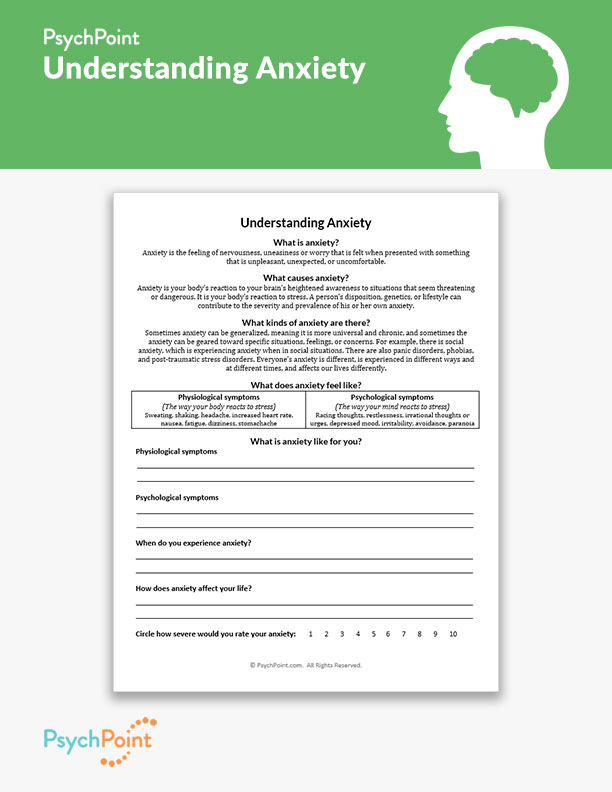
Education about anxiety, its causes, and symptoms a person may experience can help a client in therapy learn about their condition. It can also help them understand the importance of building healthy coping skills. The Understanding Anxiety worksheet explains what anxiety is and how it affects people. It gives the client a guide to understanding the experience of anxiety and how they may be affected.
The Understanding Anxiety worksheet is an informative and reflective exercise for therapists to use with their clients. The client learns about anxiety and is encouraged to make connections between their anxious feelings and how they affect their day-to-day life.
Designed to support psychoeducation and self-reflection, the Understanding Anxiety worksheet is a great tool for providing an overview of what anxiety is, what it feels like, and what can cause a person to feel anxious. It can be used in individual and group counseling sessions.
Instructions
Begin by introducing the worksheet to the client as an educational tool for learning about anxiety. Review the worksheet sections and answer any questions the client may have about the content.
After reviewing the worksheet with the client, allow them time to reflect on the information and how it resonates with them. Instruct them to answer the reflection questions.
When they have completed the questions, discuss their responses with them. You may ask reflection questions, like:
- What would you like to achieve while learning about managing your anxiety?
- How do you feel after reflecting on this worksheet?
- Which symptoms affect you the most during the day?
Use this worksheet as a tool to aid in exploring helpful coping skills and treatment planning with the client. Allow them to take home a copy of the worksheet for reference.
References
American Psychiatric Association. (2022). Diagnostic and statistical manual of mental disorders (5th ed., text rev.; DSM-5-TR). American Psychiatric Publishing.
Donker, T., Griffiths, K. M., Cuijpers, P., & Christensen, H. (2009). Psychoeducation for depression, anxiety, and psychological distress: A meta-analysis. BMC Medicine, 7, Article 79.