Countering Anxiety Thought Log Worksheet
 GinaMarie Guarino, LMHC
Managing anxious thoughts can be challenging, especially without proper tools for coping. Many things, like prolonged stress, low self-esteem, or unexpected issues, can trigger anxious thoughts. When left unmanaged, those thoughts can affect a client's confidence, motivation, and their ability to cope with triggering thoughts in a healthy way.
Clients in therapy often feel helpless about their anxiety. It is not easy to live with and is a common reason to seek counseling. Anxious thoughts can have a major impact on a client's ability to get through their day.
Helping clients challenge anxious thoughts can reduce uncomfortable symptoms and improve their ability to cope with life's stressors. One way a client can challenge their anxious thoughts is to consider the evidence that challenges the assumptions causing them to feel anxious.
About This Worksheet
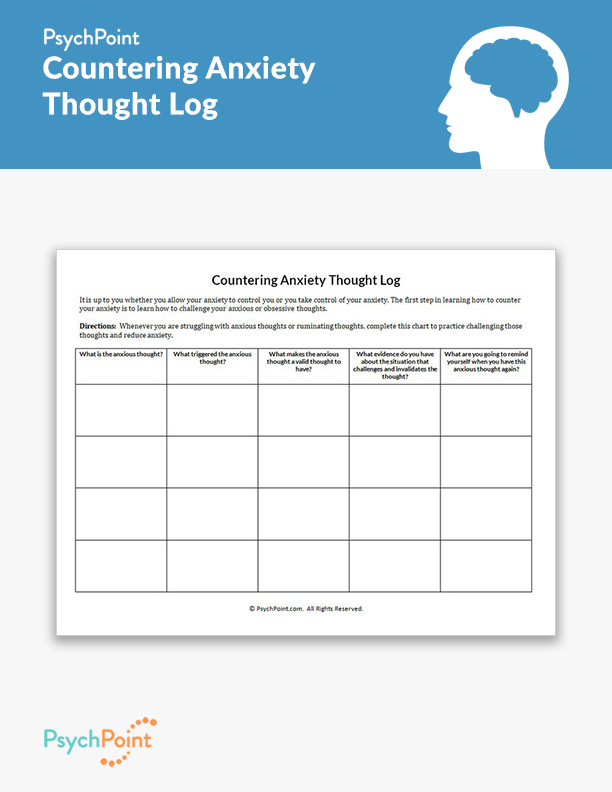
Teaching clients how to cope with anxious thoughts can help them manage anxiety so it has less of an impact on their day. The Countering Anxiety Thought Log worksheet uses skills and techniques from cognitive behavioral therapy (CBT) to help clients practice skills for challenging their anxious thoughts.
This worksheet helps a client identify and modify patterns of anxious thinking, learn how to reduce the stress that comes from their anxious thoughts, and find a resolution for their triggers. The Countering Anxiety Thought Log worksheet can help adults in individual therapy learn how to cope with stress and anxious thoughts.
Instructions
Introduce the Countering Anxiety Thought Log worksheet to the client and explain how using it can help with managing anxious thoughts. Ensure that they understand the instructions and complete each step on the worksheet with them for practice.
Guide the client through the process of countering their anxious thoughts. After you and the client have completed the worksheet together, reflect on how they are feeling. You may ask them:
- How intense is your anxiety after completing this worksheet?
- In what situations would you find this worksheet useful?
- How does it feel to explore ways to challenge your anxious thoughts?
Provide them with at least one blank copy of the worksheet and their completed worksheet to use as a reference. Encourage them to use this worksheet as a homework assignment when they struggle with anxious thoughts. Follow up on how the worksheet helped them manage anxious thoughts in the following sessions.
References
Beck, J. S. (2020). Cognitive behavior therapy: Basics and beyond (3rd ed.). Guilford Press.