What Is Imposter Syndrome? Worksheet
 GinaMarie Guarino, LMHC
Imposter syndrome can affect a client in different areas of their life, including work, relationships, social groups, academics, and more. When left unaddressed, issues related to imposter syndrome can increase stress, anxiety, lower self-esteem, and contribute to perfectionistic tendencies.
Clients suffering from imposter syndrome need to address the insecurities they feel. This will help them find relief from the pressure they put on themselves to compensate for their perceived inadequacies.
About This Worksheet
Without proper education and intervention, imposter syndrome can have lasting effects on a person's self-esteem. It can also impair their ability to develop healthy coping skills for stress. Imposter syndrome can create cycles of self-defeating thoughts and perfectionistic behaviors, but teaching a client about how to properly cope with feelings of imposter syndrome can bring them significant relief.
Introduce the What Is Imposter Syndrome worksheet to clients who are trying to reduce cycles of self-defeating thoughts and build confidence in themselves. Adolescents and adults in individual counseling who are struggling with imposter syndrome can benefit from the strengths-building exercise on this worksheet.
Instructions
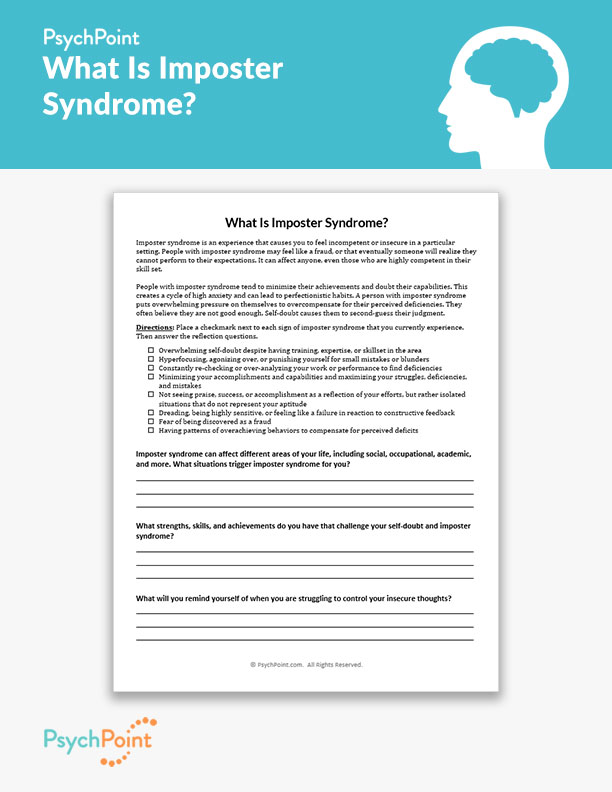
The What Is Imposter Syndrome worksheet summarizes the common experiences of imposter syndrome. It also provides reflection questions to facilitate the exploration of the client's strengths that can be used to reduce anxiety and negative thoughts associated with imposter syndrome.
Introduce the worksheet and instruct the client to place a checkmark next to each sign of imposter syndrome they experience. Then, allow them time to answer the reflection questions.
When the client has completed the reflection questions, talk about how reinforcing their strengths can help them in therapy. You may ask questions, like:
- What are the parts of yourself that give you confidence?
- When will you need a reminder of your strengths?
- How will you reinforce your strengths to reduce thoughts of imposter syndrome when you feel triggered?
Use the What Is Imposter Syndrome worksheet to help the client develop strengths-based coping skills. Thought-challenging and mindfulness coping skills may be useful to review when using this worksheet. Provide the client with a copy of their completed worksheet for reference.
References
Huecker, M. R., Shreffler, J., McKeny, P. T., & Davis, D. (2023). Imposter phenomenon. In StatPearls. StatPearls Publishing.