Distress Tolerance Skills: TIPP Worksheet
 GinaMarie Guarino, LMHC
Overwhelming emotions can become distressing for clients when they do not have the right tools for coping. Experiences like panic attacks, emotional dysregulation, anger, and trauma responses can trigger unwanted reactions if not properly addressed. Clients who do not have healthy coping skills for emotional distress are at risk of engaging in unhealthy and unsafe behaviors, like self-harm, substance use, and impulsive or reactive decisions.
Teaching clients healthy coping skills is an essential part of helping them recover from emotional distress. TIPP, a skill used in dialectical behavioral therapy (DBT), can help clients learn how to cope with their overwhelming feelings in a healthy way.
About This Worksheet
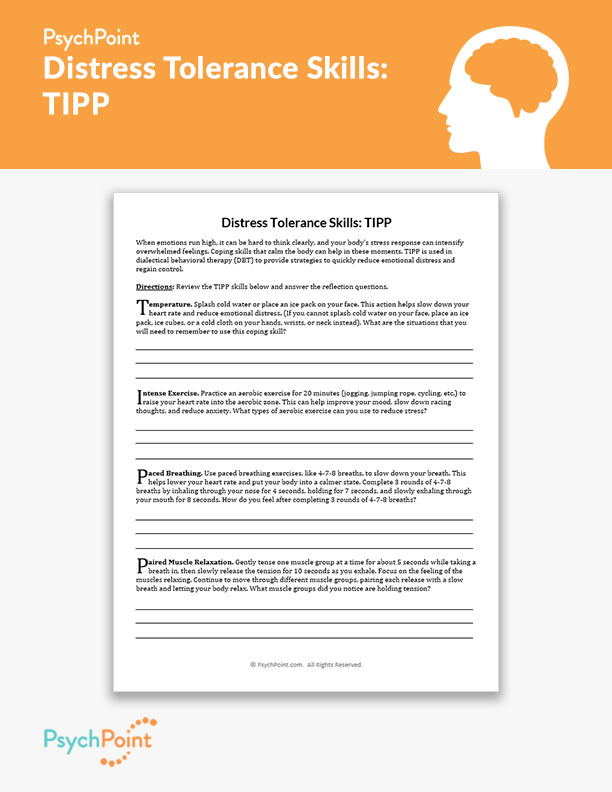
DBT offers different types of distress tolerance skills for managing overwhelming emotions. TIPP, a skill for managing emotional distress, provides the client with tools for self-soothing, grounding, and emotional regulation. The Distress Tolerance Skills TIPP worksheet explains how to use techniques to regulate the nervous system, calm the body, and reduce emotional intensity.
TIPP provides clients with practical tools that help them feel more grounded, capable, and resilient when emotions feel unmanageable. The Distress Tolerance Skills TIPP worksheet is an educational tool that can be used in individual and group therapy sessions. Adults who are participating in DBT or learning skills for emotional regulation can benefit from using this worksheet.
Instructions
The Distress Tolerance Skills TIPP worksheet breaks down the acronym TIPP to teach clients how to cope with moments of emotional distress or dysregulation. Begin by introducing the worksheet and explaining how TIPP can be used to help calm the nervous system. Review the contents of the worksheet, explaining how to best utilize each letter in the acronym.
After reviewing TIPP and explaining how it can help with managing emotions, allow the client time to answer the reflection questions. Review their responses with them and discuss how and when they can utilize TIPP to manage high emotions and distress between sessions. You may ask them questions like:
- What skills on this worksheet are you most interested in trying?
- How will you remind yourself to use TIPP coping skills?
- Which TIPP coping skills can you commit to starting this week?
Provide the client with a completed copy of the worksheet for reference. Check in with them on how they used the worksheet to practice TIPP in the next session.
References
Linehan, M. M. (2014). DBT skills training manual (2nd ed.). Guilford Press.