Personal Values Worksheet
 GinaMarie Guarino, LMHC
Clients in therapy often struggle to live a lifestyle in line with their values. People do not always stay true to their values, which can make it difficult for them to cope with stress and affect their mental health.
A client's self-image and ability to cope with stress are impacted when they are struggling to stay true to what matters most to them. Impulsivity, peer pressure, and low self-esteem can all lead a client to feel disconnected from their personal values. In such situations, it can be helpful for them to reconnect with the values that align with their identity.
About This Worksheet
Personal values are important to stay aligned with, especially when struggling with self-esteem or major life transitions. Values can grow and change, and when a client is not in touch with them, they may struggle to feel fulfilled in their life.
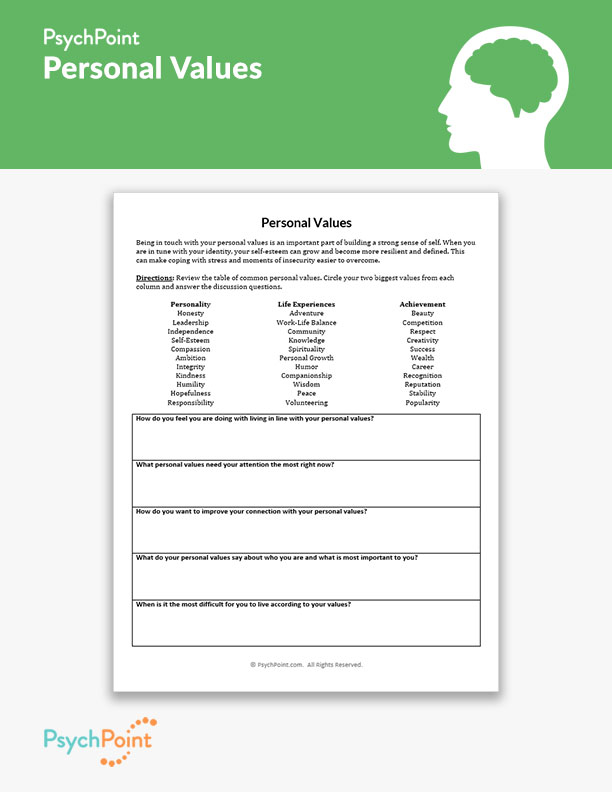
The Personal Values worksheet can help clients explore their values and ways to modify their lifestyle based on what is most important to them. This worksheet can be used with adolescents and adults in individual and group sessions. It can be especially helpful for people who feel lost, are struggling to feel satisfied with their life, or are hitting roadblocks when trying to achieve their goals.
Instructions
The goal of the Personal Values worksheet is for the client to consider how well they are currently staying true to their values. They are asked to identify their values and reflect on how their lifestyle is staying true to them.
Begin by reviewing the introduction and explaining how personal values can be incorporated into therapy. Then, instruct the client to circle their two most important values from each column and answer the reflection questions.
When the client is finished, review their values and responses to the discussion questions. You may ask questions that encourage reflection, like:
- Do you currently feel aligned with the values you circled?
- How do you feel about how your values fit into your current lifestyle?
- Why are each of these values important to you?
Start a dialogue about how they can incorporate their values into their work in therapy. Then, explore the goals they want to set to support a lifestyle aligned with their values.
References
Bonow, J. T., & Follette, W. C. (2009). Beyond values clarification: addressing client values in clinical behavior analysis. The Behavior analyst, 32(1), 69–84.