Cycle Of Abuse Worksheet
 GinaMarie Guarino, LMHC
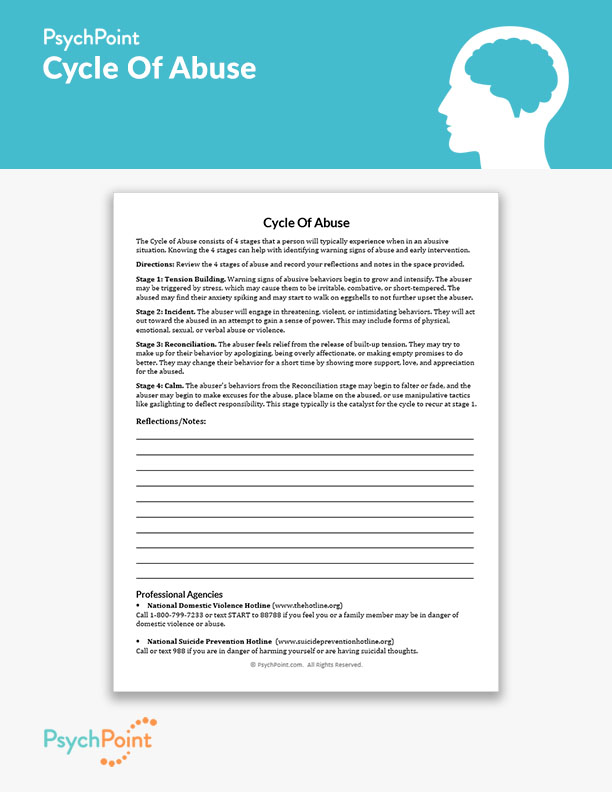
The cycle of abuse was developed in 1979 by Lenore E. Walker. Recent adaptations outline 4 stages that occur in an abusive relationship: Tension Building, Incident, Reconciliation, and Calm. Defining these stages can be a useful tool for learning about abusive relationship patterns and how they affect both the abused and the abuser.
Coming to terms with the reality of an abusive situation can be tough for a person, but it is important to know the warning signs of abuse. Understanding how the cycle of abuse may present itself can help a person identify and make a plan to leave an abusive situation, and prevent harm from coming to themselves or others.
About This Worksheet
This is the Cycle Of Abuse worksheet. This worksheet describes what behaviors an abuser may exhibit in each of the 4 stages of an abuse cycle. The worksheet also provides contact information for public resources that can help a person in crisis or someone who is trying to leave an abusive situation.
The Cycle Of Abuse worksheet is intended to be used with adults who are struggling with abuse in a relationship or domestic violence. It should be used in individual sessions and can be used as a tool for safety planning.
Instructions
Review the introduction and the stages of the Cycle of Abuse with the client. Answer the client's questions and help them identify any warning signs of abuse in their relationship. Encourage the client to take notes as needed.
You may also review the provided hotline information and help them develop a plan to take care of themselves. The plan may include outlining details, like:
- Trusted friends and family members
- Safe places you can go if needed
- Location of the closest emergency services
- Security of electronic devices and finances
- Actionable steps to take in the event of an emergency
Provide the client with a copy of this worksheet for reference if it is safe to do so. Walk them through the steps for utilizing the action plan if they feel threatened or in danger.
References
Rakovec-Felser, Z. (2014). Domestic violence and abuse in intimate relationship from public health perspective. Health Psychology Research, 2(3), Article 1821.
Walker, L. E. (1979). The Battered Woman. New York, NY: Harper & Row.
Download
More Relationship Worksheets