Mindfulness Meditation Worksheet
 GinaMarie Guarino, LMHC
When confronted with a difficult situation or an uncomfortable feeling that is not easily resolved, clients can fall into a pattern of ruminating on the thoughts that are causing discomfort. Ruminating thoughts often create a sense of urgency for the client to resolve an issue or find a solution to help them feel better. With that sense of urgency, it is hard to take time and space to calm down before considering how to respond to stressors in a healthy way.
As we move through life, we learn that sometimes it is not easy to find a solution or relief from stress. Sometimes, we need to deal with prolonged and uncomfortable circumstances that we have little control or influence over.
In situations like this, it is important to have a set of skills and strategies to cope with the stress and discomfort that the circumstances cause in the moment.
About This Worksheet
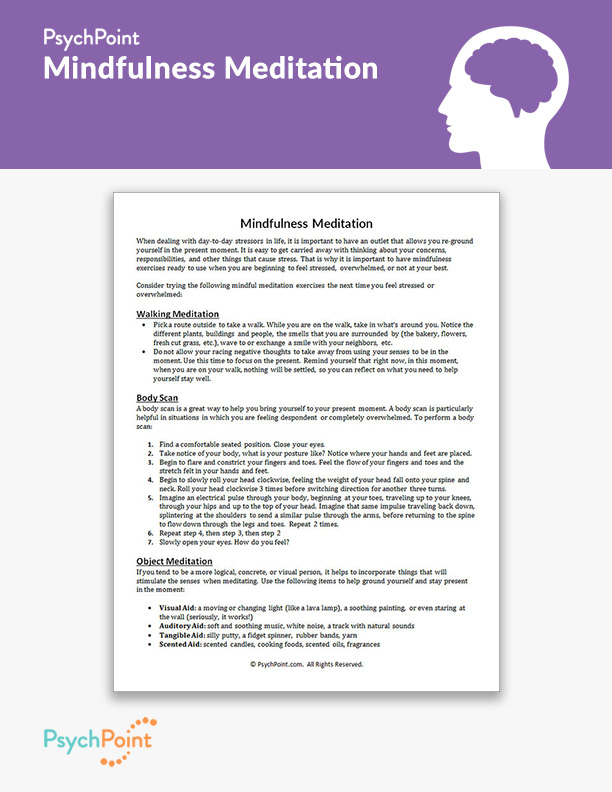
Mindfulness and meditative exercises can help when feeling ungrounded or out of control. Teaching clients mindfulness meditation exercises can help them learn how to cope with prolonged stress and calm themselves down when feeling overwhelmed. The Mindfulness Meditation worksheet outlines 3 mindfulness meditation exercises:
- Walking Medication
- Body Scans
- Object Meditation
These exercises can help with managing stress and coping with anxiety and fears for the future. The Mindfulness Meditation worksheet can be used with adults in individual and group counseling sessions. It can be especially helpful for clients who are participating in dialectical behavior therapy (DBT).
Instructions
The exercises on the Mindfulness Meditation worksheet help clients manage day-to-day stress and deal with unexpected life challenges. Each exercise is easy to perform and can be incorporated into a client's daily schedule.
Mindfulness meditation exercises can be used daily or as needed. Begin by introducing the worksheet to your client. Review and practice each exercise with the client during the session or explain how to use them in daily life.
Instruct the client to use the mindfulness meditation exercises daily for one week. Then, reflect on the client’s experience during the following session. Ask them reflection questions, like:
- Did you notice any changes in how you feel after completing the exercises?
- How have your ruminating thoughts been since starting these exercises?
Encourage the client to use the mindfulness meditation exercises when they feel helpless, out of control, or overwhelmed. They can help with managing ruminating thoughts, mood swings, and prolonged stress.
References
Linehan, M. M. (2015). DBT skills training manual (2nd ed.). Guilford Press.
Marra, T. (2005). Dialectical behavior therapy in private practice: A practical and comprehensive guide. New Harbinger Publications.