Exploring Anxiety Discussion Questions Worksheet
 GinaMarie Guarino, LMHC
Creating a safe space for clients to share similar experiences with anxiety can help build trust in trying new strategies for managing symptoms. In a group therapy setting, clients have the opportunity to learn from each other and work together to develop healthier coping skills. Relating to group members with similar struggles can be valuable for promoting mental health practices.
Anxiety is a common experience, and having a space where clients can safely share and receive feedback encourages social learning and the development of healthy coping skills. Group discussions about the challenges that come with anxiety allow clients to share experiences, explore challenges and coping skills, and recognize that they are not alone.
About This Worksheet
Exploring anxiety can be a helpful exercise for clients in group therapy. While each case is unique, there are common patterns of anxiety that therapy group members will likely relate to. Hearing relatable experiences from group members can foster teamwork and encourage the exploration of healthy coping skills.
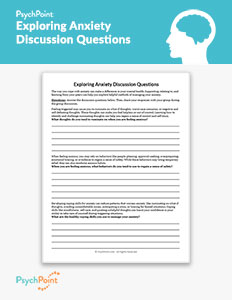
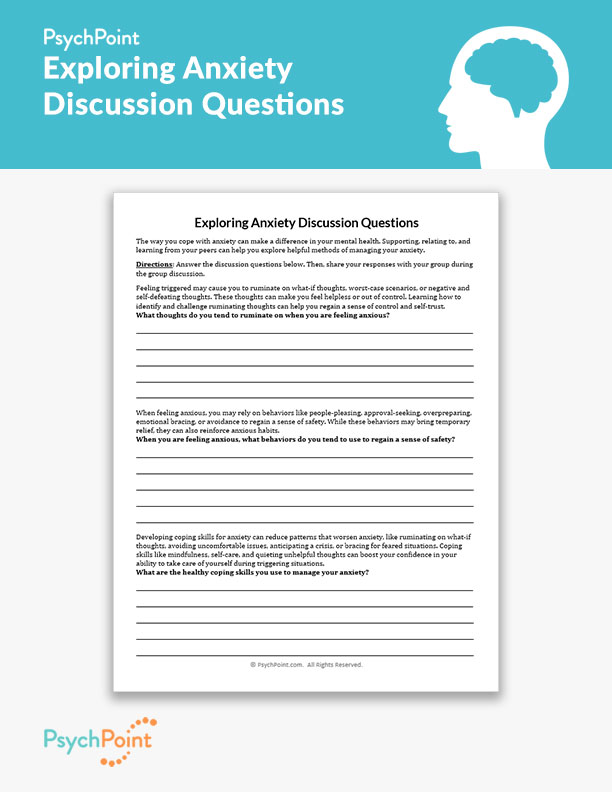
The Exploring Anxiety Discussion Questions worksheet provides education about anxiety and prompts clients to reflect on their thoughts during group discussions. Using this worksheet can help stimulate conversation about triggers, reactions, and coping skills for managing anxiety. This group exercise can be used with adolescents and adults who are struggling to cope with anxious symptoms.
Instructions
Introduce the Exploring Anxiety Discussion Questions worksheet to the group and explain how learning from and relating to group members can help with learning healthy ways to manage anxiety. Review the introductory paragraph, content, and reflection questions with the group and instruct the group members to answer the reflection questions independently.
When the group has recorded their responses, review each reflection question and allow time for clients to share their responses and discuss as a group. The following are follow-up questions you may ask to further facilitate the group discussion:
- How do ruminating thoughts affect how you feel and what you do?
- How do your anxious behaviors affect your confidence in managing your triggers?
- What can make it challenging to use your healthy coping skills in the moment of feeling triggered?
Encourage the group members to support each other in building healthy coping skills by highlighting similarities in the group’s experiences with anxiety.
References
American Psychiatric Association. (2022). Diagnostic and statistical manual of mental disorders (5th ed., text rev.; DSM-5-TR). American Psychiatric Publishing.
Donker, T., Griffiths, K. M., Cuijpers, P., & Christensen, H. (2009). Psychoeducation for depression, anxiety, and psychological distress: A meta-analysis. BMC Medicine, 7, Article 79.