Emotion Log Worksheet
 GinaMarie Guarino, LMHC
Exploring emotions is an important process in therapy. Clients often have some awareness of how they feel but may avoid uncomfortable emotions. This can prevent them from understanding their reactions to emotions or what triggers them.
Clients in therapy are often not aware of how their emotions affect them. This can lead to challenges with stress, anxiety, mood changes, and more. Helping clients connect with uncomfortable emotions can help them recognize the triggers that are causing them stress.
Providing clients with exercises that help them connect with their emotions can aid in building emotional resilience. It can also encourage them to engage in healthier coping strategies and reduce unhealthy behaviors that are affecting their mental health.
About This Worksheet
Exercises that explore emotions can help clients discover what causes their reactions and how their emotions affect their daily life. Clients deal with triggers daily. Exploring emotional responses to triggers can encourage them to confront factors that may be causing them stress.
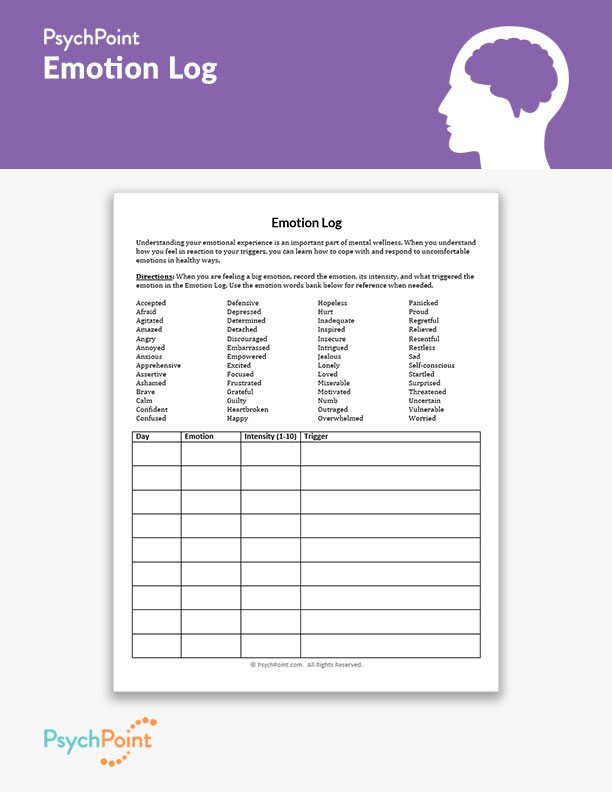
Helping clients recognize how strongly they feel their emotions can also engage them in using coping skills to reduce reactivity and promote a sense of calm. The Emotion Log worksheet is a homework assignment for clients who are learning how to be in touch with their emotions.
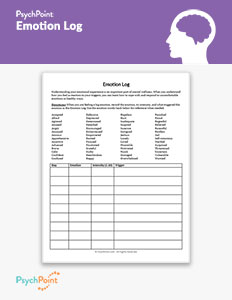
The Emotion Log worksheet is a simple exercise that encourages clients to record their emotions and triggers daily. It also logs the intensity of the emotions that the client feels. Adolescents and adults can use this worksheet to log their emotions and triggers between individual therapy sessions.
Instructions
Introduce the Emotion Log worksheet to the client and explain how it can help them tune into their emotional experience. Review the introduction and directions with them, providing an example of how to identify the emotion they feel, its intensity, and what triggered the emotion.
Instruct the client to log at least 1 strong emotion per day for 7 days. When they return for the following session, review the log with them. Reflect on the emotions that the client experienced and consider the patterns between the triggers and emotional reactions they logged.
Check in on the intensity of the emotions the client felt by asking them if each emotion feels more intense, less intense, or the same as when they were triggered. Ask reflection questions, like:
- Why is the intensity of this emotion lower now than it was in the moment?
- What is still causing you to feel this emotion so strongly?
- What do you need in order to feel these emotions more calmly when you are triggered?
Stronger emotions may need extra attention during the session. Use the completed worksheet to help the client identify patterns for triggers and emotions. Then, begin exploring coping skills for calmer emotional reactions.
References
Beck, J. S. (2020). Cognitive behavior therapy: Basics and beyond (3rd ed.). Guilford Press.
Riachi, E., Holma, J., & Laitila, A. (2022). Psychotherapists’ views on triggering factors for psychological disorders. Discover Psychology, 2(1), Article 44.