Triggers And Coping Strategies For Depression Worksheet
 GinaMarie Guarino, LMHC
Depression is a condition that can weigh heavily on a person. Many people with depression struggle to cope with their symptoms each day. Not fully understanding how depression affects a person prevents them from learning what they need to do to help themselves feel better.
An important first step when someone with depression enters therapy is to learn about the triggers and stressors that are causing depression, along with their current methods of coping with a depressed mood.
Like all mood disorders, it is important to understand depression. A person with depression must know what triggers them and how their coping strategies affect how they feel. They must also learn about healthy coping strategies they can use in between their therapy sessions.
People with depression tend to feel hopeless about getting better. This can prevent them from trying new things to manage their depressed mood. Many do not realize how their unhealthy habits affect their progress in therapy.
About This Worksheet
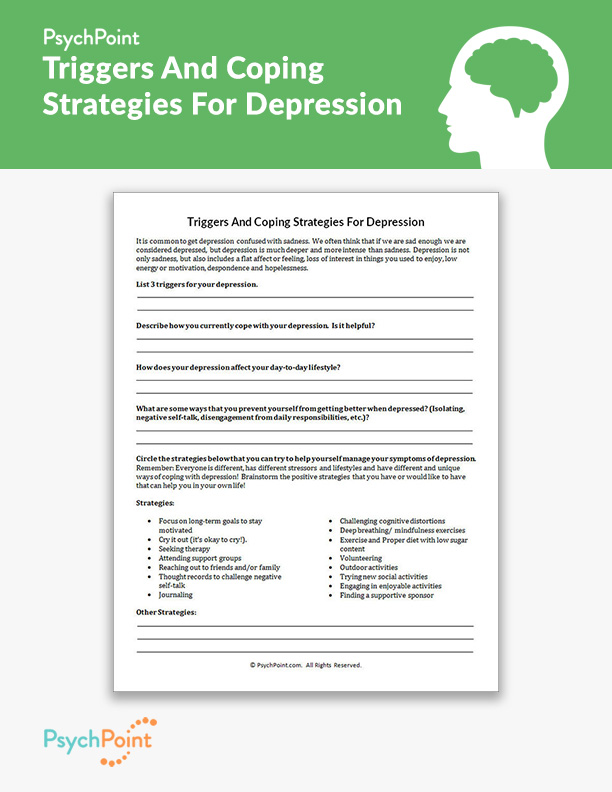
This is the Triggers and Coping Strategies for Depression worksheet. This worksheet helps people confront their triggers for depression and how their depression affects them each day. It also addresses coping strategies a person with depression can use to feel better, along with unhealthy habits they should avoid.
Reflection questions and suggestions for healthy coping strategies are provided on this worksheet. It also provides a space for brainstorming new coping strategies, which can be a valuable exercise in both group and individual sessions.
Adults with depression can learn more about their condition with this worksheet. It can be helpful in individual and group counseling sessions.
Instructions
This worksheet reflects on the client's triggers for depression. It brings focus to unhealthy coping strategies used to manage depressed moods.
Review the content on the worksheet with your client or group. Incorporate your knowledge to provide education about depression. Instruct the client to complete the reflection questions.
When they have completed the questions, review the results with them. Discuss how knowing triggers and coping strategies can help with managing depression. You may ask discussion questions, like:
- What did you learn about your triggers for depression from completing this worksheet?
- How do you feel about the coping strategies you are already using?
- Which coping strategy would you like to focus on in the upcoming weeks?
You can also encourage the client to refer to this worksheet when they are feeling down or need to review the coping strategies they would like to use. Provide the client with a copy of their completed worksheet as a reference.
References
Hammen, C., & Burge, D. (2016). Daily stress, coping, and negative and positive affect in depression: Complex trigger and maintenance patterns. Journal of Affective Disorders, 201, 190–197.
Theodoratou, M., & Argyrides, M. (2024). Neuropsychological insights into coping strategies: Integrating theory and practice in clinical and therapeutic contexts. Psychiatry International, 5(1), 53–73.
Download
Download Triggers And Coping Strategies For Depression Worksheet
More Emotional Intelligence Worksheets