Food Diary Worksheet
 GinaMarie Guarino, LMHC
People can develop unhealthy eating habits for different reasons. Some people use food as a reward, punishment, or comfort. Others may struggle with maintaining their appetite or overeat when feeling stressed. Establishing and maintaining a healthy diet is a critical part of mental health. Without a healthy body, a client in therapy will struggle to maintain a healthy mindset toward healing.
Teaching clients how to be mindful of their eating habits can support better stress management, improve body image, and promote overall well-being. A food diary can be a helpful tool for tracking dietary habits and appetite.
About This Worksheet
Eating a healthy diet is an important part of physical and mental health, but sometimes clients may use food to cope with stress. Whether that means overindulging, restricting diet, or struggling with appetite changes, challenges with eating can cause extra stress for a client in therapy.
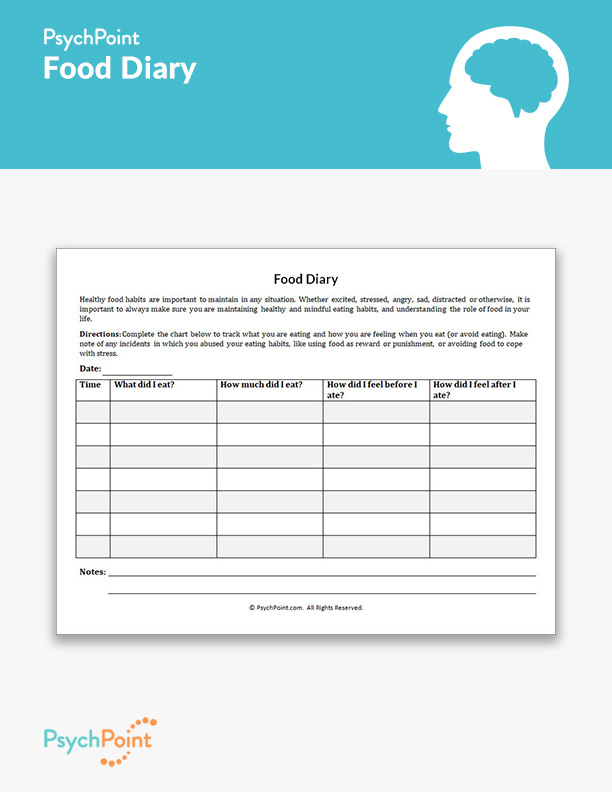
Clients can use the Food Diary worksheet to log their eating habits, triggers, and portions. This worksheet provides a chart for clients to track how their feelings and eating habits affect each other, helping them identify and modify unhealthy patterns and attitudes.
The Food Diary worksheet is intended to be used as a homework assignment for clients participating in individual therapy. It can be used to support adolescents and adults by increasing awareness of eating habits and emotions, which can be a helpful tool for clients experiencing disordered eating, stress, anxiety, or mood-related challenges.
Instructions
When using the Food Diary worksheet, the client keeps track of what they eat throughout the day and how they feel when they are eating. They are also provided with a Notes section, where they may record notes relevant to their eating habits, triggers, stressors, reflections, and thoughts on the exercise.
Provide the client with copies of the worksheet and instruct them to complete one sheet per day between sessions. During their next session, review the results to identify triggers and causes of unhealthy eating. Start a dialog about how their emotions may be interacting with their eating habits. You may consider asking questions, like:
- What patterns did you notice while completing your food diary?
- How do you feel about your eating habits after reviewing the worksheet?
- What changes would you like to implement to improve your relationship with food?
Be sure to address the client's feelings and concerns about their patterns and motivation to make healthy changes. Use this dialog as an aid for goal planning.
References
Cherpak C. E. (2019). Mindful Eating: A Review Of How The Stress-Digestion-Mindfulness Triad May Modulate And Improve Gastrointestinal And Digestive Function. Integrative medicine (Encinitas, Calif.), 18(4), 48–53.
Nelson J. B. (2017). Mindful Eating: The Art of Presence While You Eat. Diabetes spectrum: a publication of the American Diabetes Association, 30(3), 171–174.