CBT For Anxiety Worksheet
 GinaMarie Guarino, LMHC
When teaching a client how to use cognitive behavioral therapy (CBT) for managing anxiety, it helps a great deal to provide an outline of helpful steps. Clients who struggle with severe or chronic anxiety have difficulty maintaining control over anxious thoughts that cause uncomfortable feelings and behavior.
It is important to teach clients in CBT treatment to begin working through anxious feelings and thoughts at the source, before they race out of control. Providing a step-by-step exercise can help them learn a healthy process of coping with anxiety.
About This Worksheet
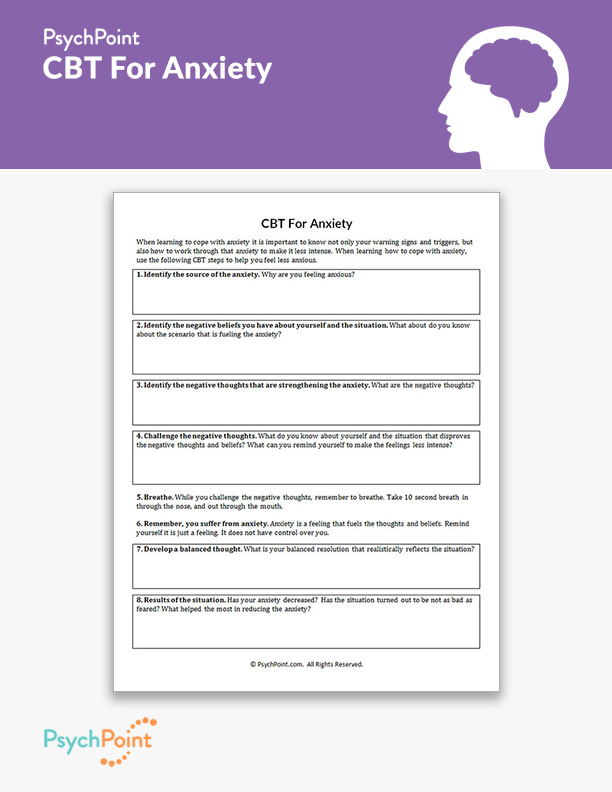
Slowing down anxious thoughts that trigger negative beliefs and feelings can be a helpful coping method. The CBT For Anxiety worksheet provides a guide for clients to learn how to tackle anxious thoughts and feelings early on, so they do not get out of control and take over the client. This can help prevent and reduce feelings of helplessness.
By working through the eight steps provided on this worksheet, the client will learn to maintain self-control in response to challenging situations. This will help them remain aware of how anxiety is affecting them, rather than how the situation is causing anxious feelings and thoughts. The CBT For Anxiety worksheet can help adults participating in cognitive behavior therapy. It is best utilized in individual therapy sessions.
Instructions
The CBT For Anxiety worksheet helps the client break down stressful and anxious feelings into eight steps. To begin working with this worksheet, guide the client through the eight steps by working on different situations together. It may take two or three attempts to work with the client through the eight steps before they can perform the task on their own.
For additional reflection on how anxiety is affected by negative thoughts and beliefs, ask the following questions before and after working through the steps:
- On a scale of 1 to 10, how strong is your anxiety before starting this exercise?
- Using the same scale, how do you rate your level of anxiety after completing the steps on this worksheet?
Once the client is confident in their ability to use the worksheet on their own, provide them with a blank copy to use between sessions. Discuss how using the worksheet is helping them manage anxious feelings in the following sessions.
References
Beck, J. S. (2020). Cognitive behavior therapy: Basics and beyond (3rd ed.). Guilford Press.
Download
More Social Skills Worksheets